How bunker maintenance affects the playability of your course
Ask golfers about bunkers and you will hear the same word over and over: consistency. A bunker is a hazard, so it is meant to be a penalty, but it is only a fair one when every bunker plays the way a golfer expects. The difference between a well-maintained bunker and a neglected one is not really about looks, it is about whether the shot is predictable, and that predictability is what your bunker maintenance either delivers or destroys.
Bunkers are also, hole for hole, some of the most labour-intensive ground on the course, which is why how you maintain them shapes both the golfer’s experience and your crew’s workload. Having supplied bunker equipment to New Zealand courses since 1988, we have seen how much this one area drives member satisfaction. Here is how maintenance translates into playability, and how to keep it consistent.
Parkland has supplied turf and golf equipment to New Zealand courses since 1988. If you would rather talk it through, call the team on 0800 807 333.

Why consistency is everything
A golfer who lands in a bunker accepts the penalty. What they cannot accept is a lottery, where one bunker is soft enough to bury the ball and the next is firm enough to bounce it out, or where a fried-egg lie in an unraked patch decides the hole rather than the shot. Consistency is what makes the hazard fair: the same sand depth, the same firmness, and the same groomed finish across every bunker, so the shot rewards skill rather than luck. That is the whole aim of bunker maintenance, and it is why members notice the difference immediately even when they could not tell you technically what changed.
Sand depth and firmness
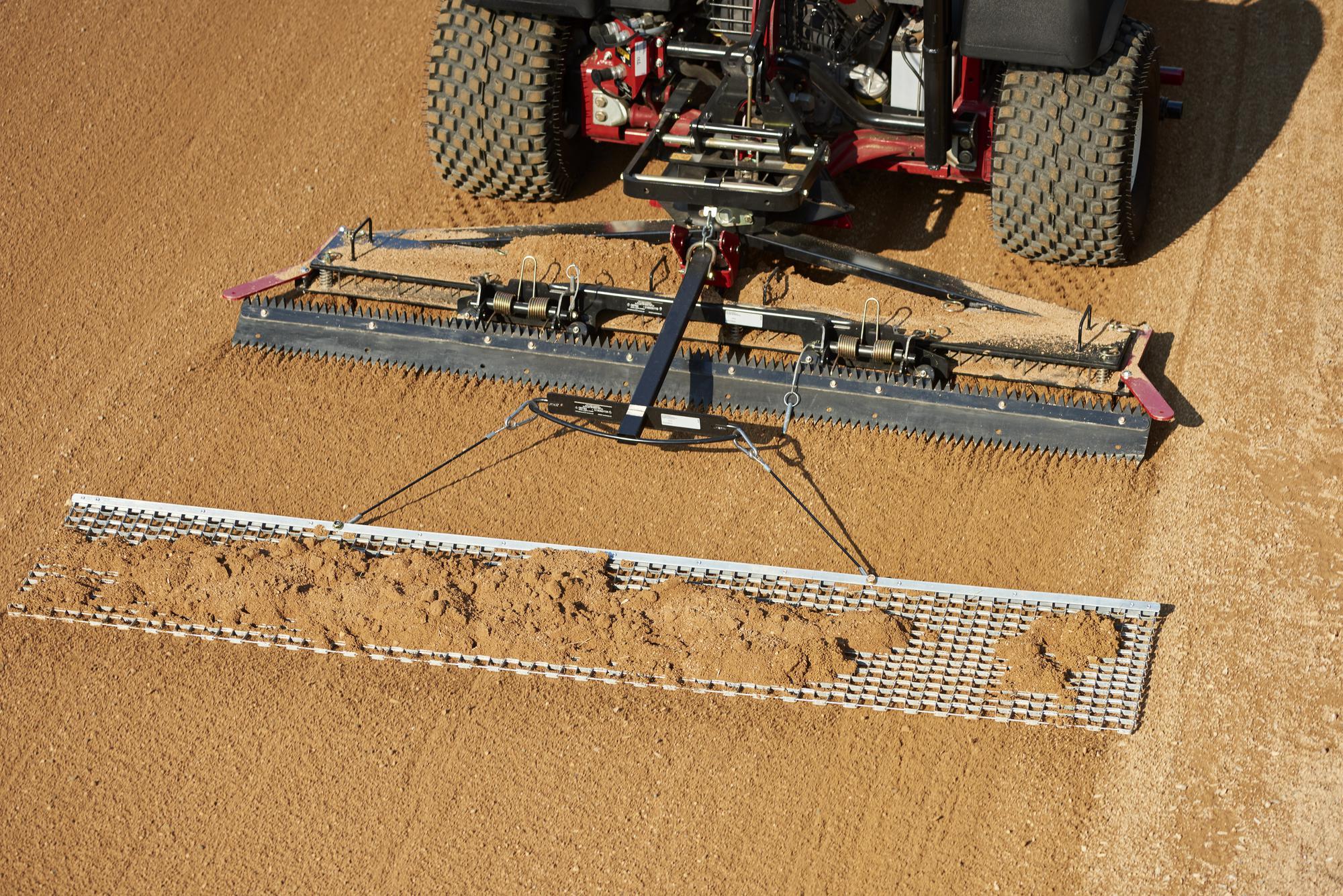
Two things drive how a bunker plays: how deep the sand is and how firm it sits. Too little sand and players catch the base and the ball can bounce unpredictably; too much and the ball plugs. Consistent depth across the floor and up the faces is what keeps the lie fair, which is why crews check and redistribute sand rather than just skimming the surface. Firmness matters just as much. Sand that is regularly cultivated stays open and plays true, while sand left alone compacts and crusts, especially after rain, giving hard, inconsistent lies. Regular raking is what keeps that top layer in the right condition, and it is exactly the job a machine does uniformly where hand work drifts.
Keeping bunkers consistent through the season
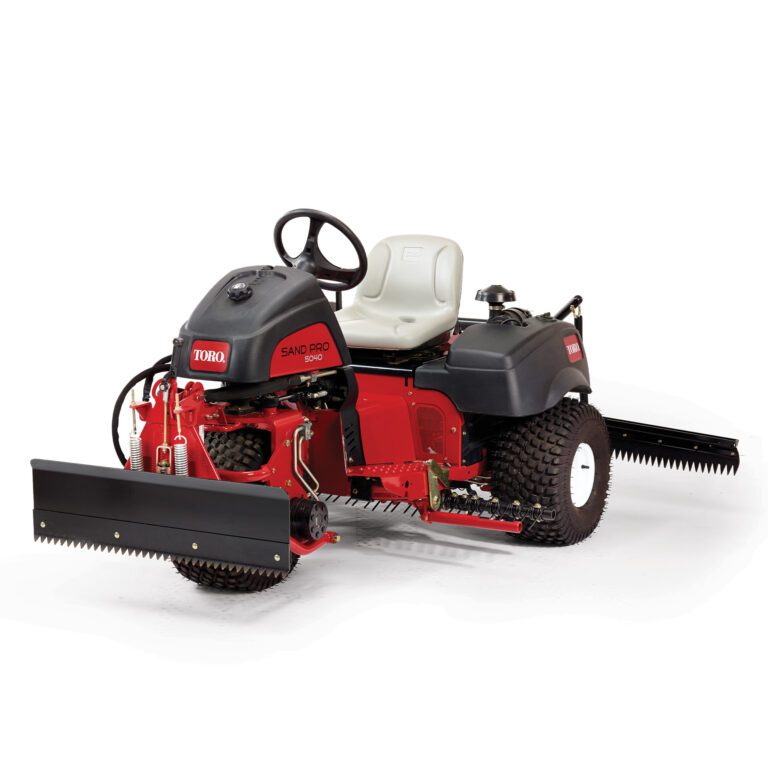
The practical answer is a routine. Bunkers are best groomed regularly and to the same standard, ideally before play, so they present consistently every day rather than sharp for the weekend and rough midweek. Sand gets dragged down the faces by play and washed down by rain, so part of the routine is ploughing it back up and topping up where it thins. New Zealand’s wet spells make drainage and post-rain grooming a recurring job, not a one-off. This is where a ride-on rake like the Toro Sand Pro pays for itself, letting one operator deliver that same finish across every bunker before the first groups, day after day, which hand raking struggles to sustain once the course has any real number of bunkers.
If bunker consistency is a sore point at your course, the equipment is usually the lever. Our guide to what a sand rake is and why courses need one covers the machine, manual vs mechanical sand raking weighs the labour, and choosing and buying a bunker sand rake helps you pick. To talk through your bunkers, call 0800 807 333 or see the bunker and sand rakes range.