Manual vs mechanical sand raking: what’s best for your course?
Every course rakes its bunkers somehow, and the real question is how much of it should be done by hand and how much by machine. Hand raking is cheap to start and gives a careful finish, but it is slow and only as consistent as the person doing it. A ride-on sand rake costs more up front but grooms every bunker to the same standard in a fraction of the time. For most courses the answer is not one or the other, it is knowing where each earns its place.
Parkland has supplied turf and golf equipment to New Zealand courses since 1988, so we have watched a lot of clubs make this call. If you would rather talk it through, call the team on 0800 807 333.
The case for hand raking
Hand raking has real virtues, and it never disappears entirely. It costs almost nothing to begin, needs no machine to maintain, and a good operator can produce a lovely finish, especially on steep faces, tight pot bunkers and the detailed edges a machine cannot reach. On a course with only a handful of small bunkers, or where labour is plentiful and play is light, hand raking may be all you need. The catch is that it does not scale. The finish varies from person to person and day to day, it is slow, and once you are trying to prepare dozens of bunkers before the first groups tee off, the crew simply cannot keep up without swallowing the whole morning.
The case for a mechanical rake
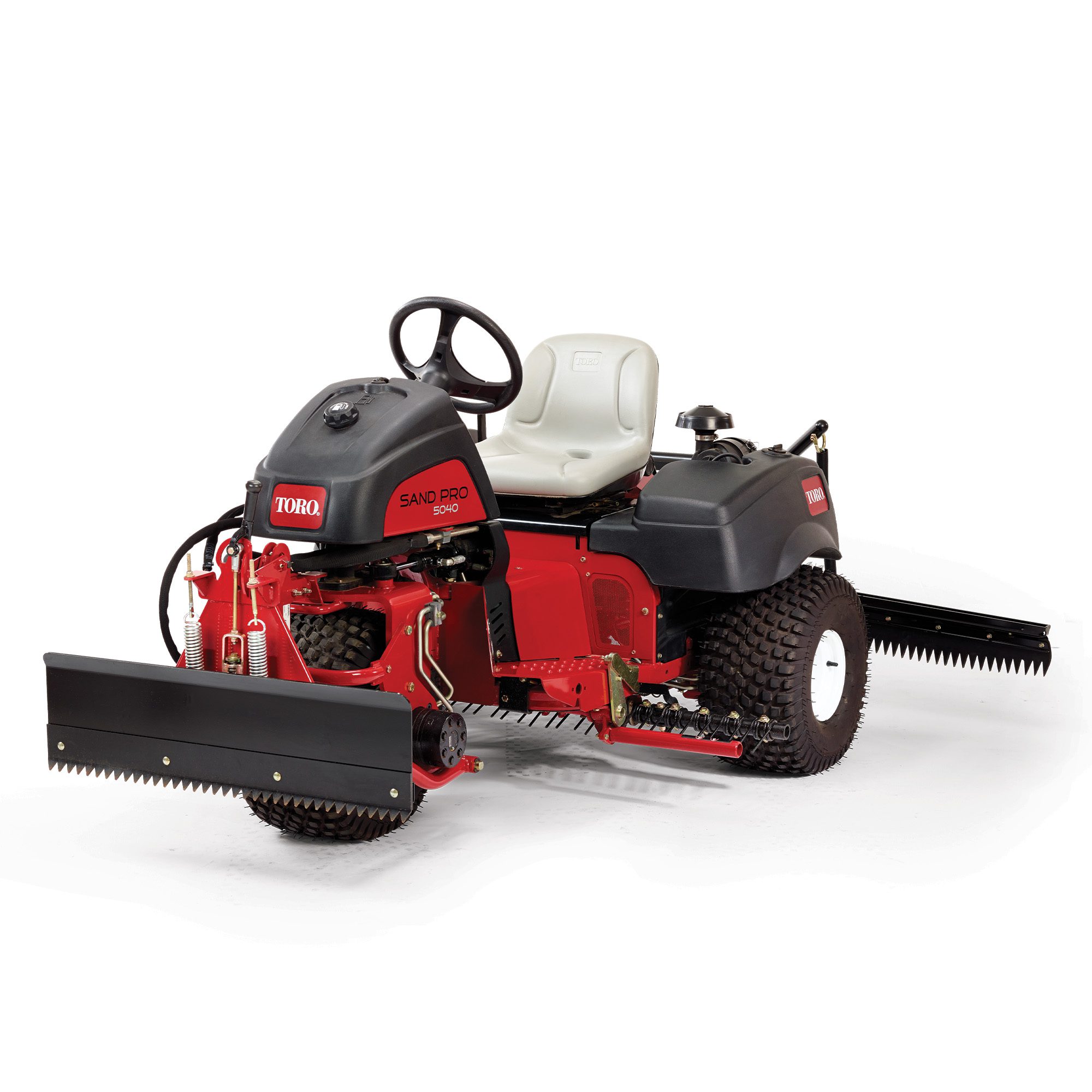
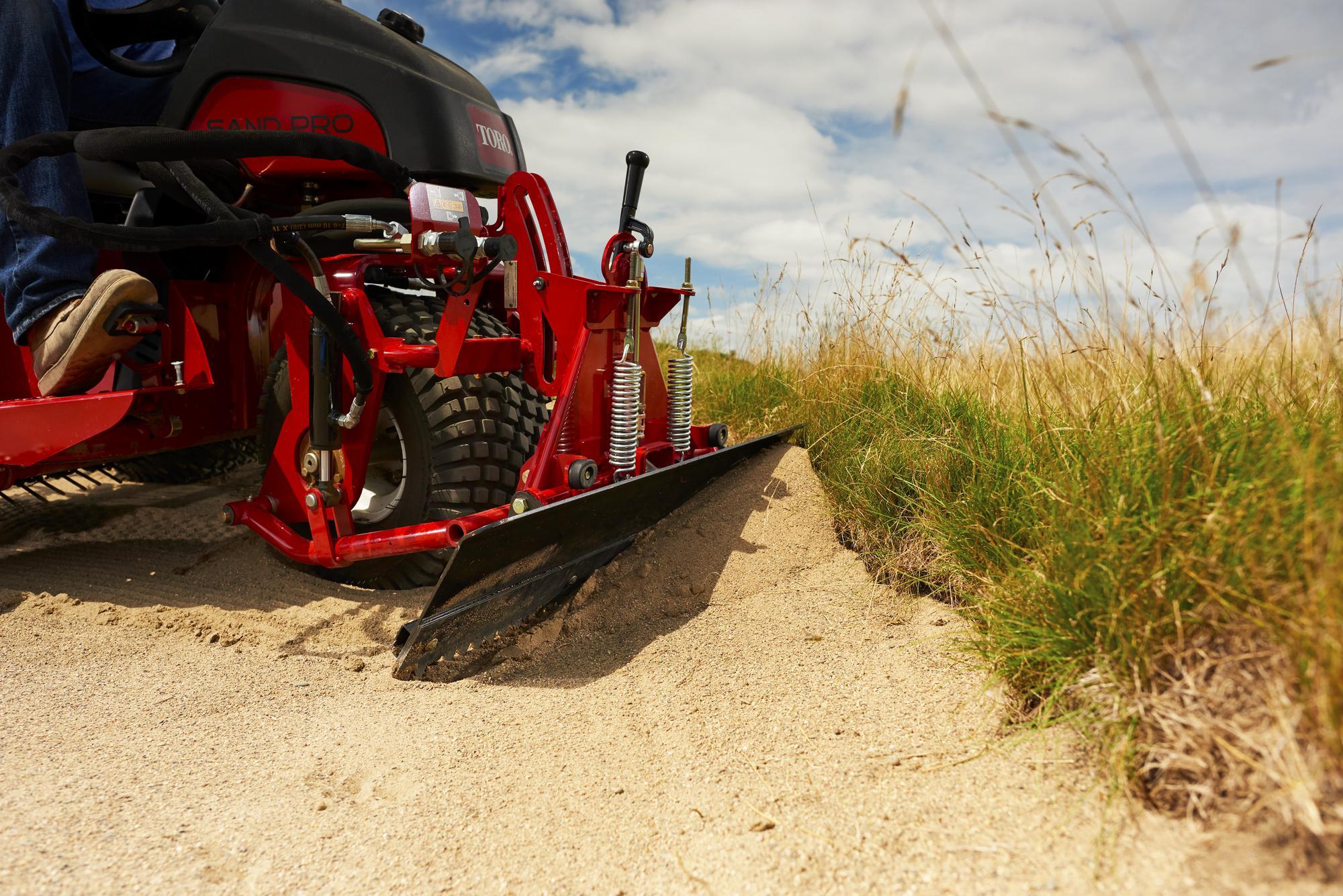
A ride-on machine like the Toro Sand Pro flips the equation. One operator can groom all the bunkers on a course to an identical, fair finish in the time a team would take to do a fraction of them by hand, which frees the rest of the crew for mowing, setup and everything else the morning demands. The consistency is the part golfers actually feel: every bunker cultivated to the same firmness and finish, hole after hole. And because the machine takes attachments, it does jobs hand raking never could, from ploughing sand back up washed faces to light work on surrounds. The cost is the purchase and the servicing, and it needs an operator who knows how to use it well, but across a season the labour it saves usually makes the maths straightforward.
What is best for your course?
The deciding factor is the size of the job. A small course with few, simple bunkers and available labour can run on hand rakes and spend the money elsewhere. Any course with a real number of bunkers, or one presenting to a standard members expect, will get that back quickly from a machine, both in hours saved and in consistency gained. And most courses land in the sensible middle: a Sand Pro for the daily grooming of the bulk of the bunkers, with hand rakes kept for the faces, edges and awkward spots where a careful hand still wins. It is not a purist’s choice, it is a practical one, and the two together give you the best presentation for the least labour.
If the numbers point towards a machine, our guide to choosing and buying a bunker sand rake in NZ walks through the options, and what a sand rake is and why courses need one covers the fundamentals. To talk through the labour case for your own course, call 0800 807 333 or see the range on our bunker and sand rakes page.