Cleaning artificial turf: why it matters and how dirt actually builds up
Artificial turf looks tidy from the stand until you get down into the pile. Dust, leaf litter, fibre wear and the fine stuff that comes off boots all settle into the infill. Left there, the surface goes hard, the ball starts sitting up strangely, and the field that was sold as low maintenance becomes the one nobody wants to train on in August. Cleaning is not a polish. It is how you keep the infill moving and the fibres standing so the carpet still plays like carpet.
We have supplied SMG kit to New Zealand hockey, football and multi-use fields for years, and the pattern is the same: the sites that clean on a rhythm keep the surface. The sites that wait for a complaint buy a rescue job. Parkland has done this work since 1988. Call 0800 807 333 if you would rather talk the field through than read another brochure.
How dirt actually builds up
Infill is meant to support the fibre and take the sting out of a fall. Sand and rubber (or the mix your installer used) sit in the pile, and they only work while they stay loose. Play packs them. Rain washes fines down. A dry northerly drops grit into the same holes. Worn fibre adds a grey dust that no broom really lifts. On a hockey turf the problem shows first as a shiny, compacted run in the high-traffic lanes. On a football pitch it is the places where the ball stops dead and the studs stop biting.
A proper cleaner does three things at once. A brush lifts the pile and the infill. A sieve or vibrating screen (SMG sets theirs from 4 to 10 mm) lets the good infill fall back and holds the rubbish. A vacuum or turbine takes the dust so you are not just rearranging it. That is why a drag mat is not a cleaner. A mat moves infill around. A cleaner separates dirt from the stuff you paid to have in the carpet.
The signs the field is asking for a clean
The surface feels boardy underfoot. Infill sits in waves instead of an even bed. Fibres lie over and will not stand after a brush with a hand broom. You see a grey film on the top of the pile after a dry week. After rain the water sits rather than dropping through. Players start talking about the bounce, which is usually the infill talking. If any of that is already true, you are behind, not early.
The machines that do the job
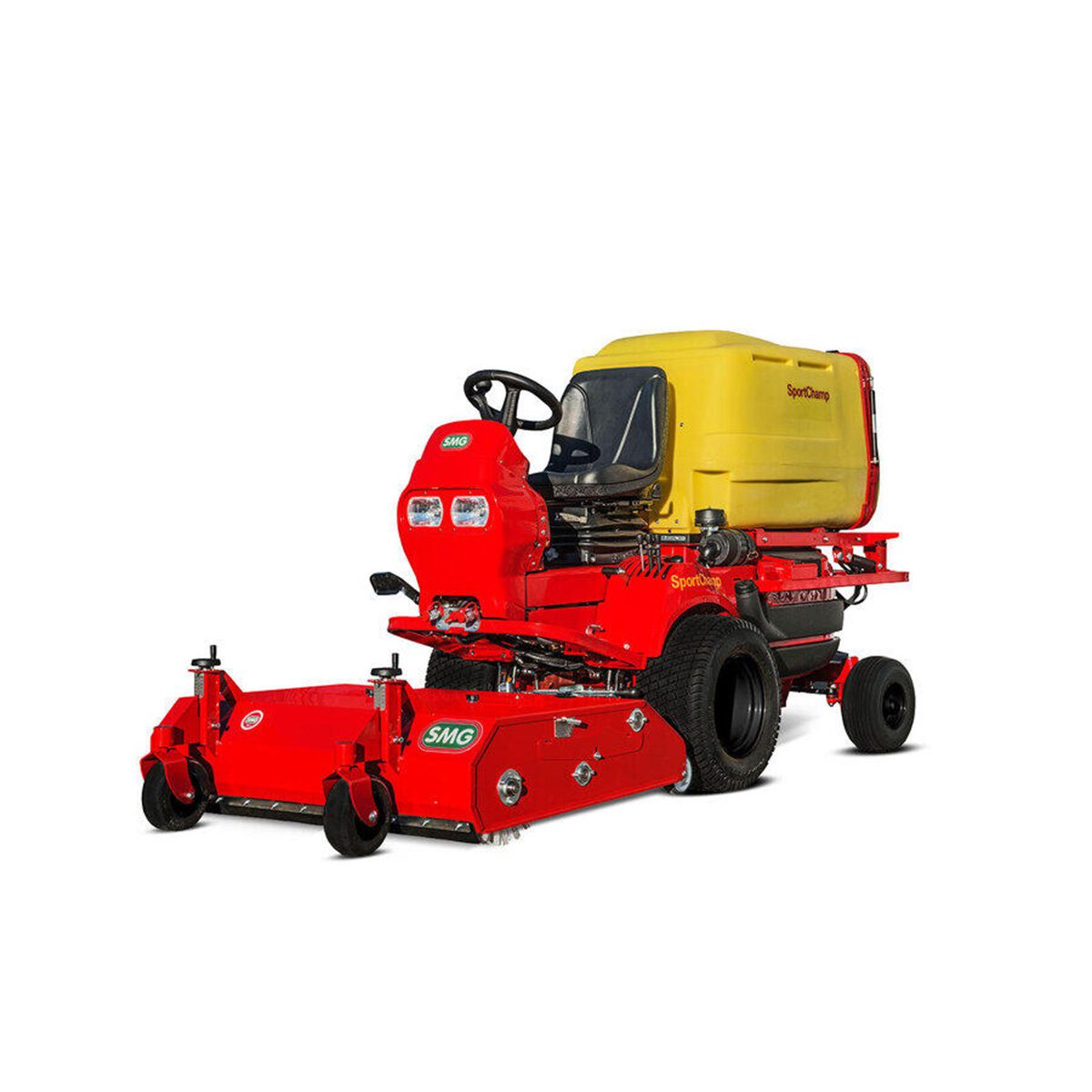
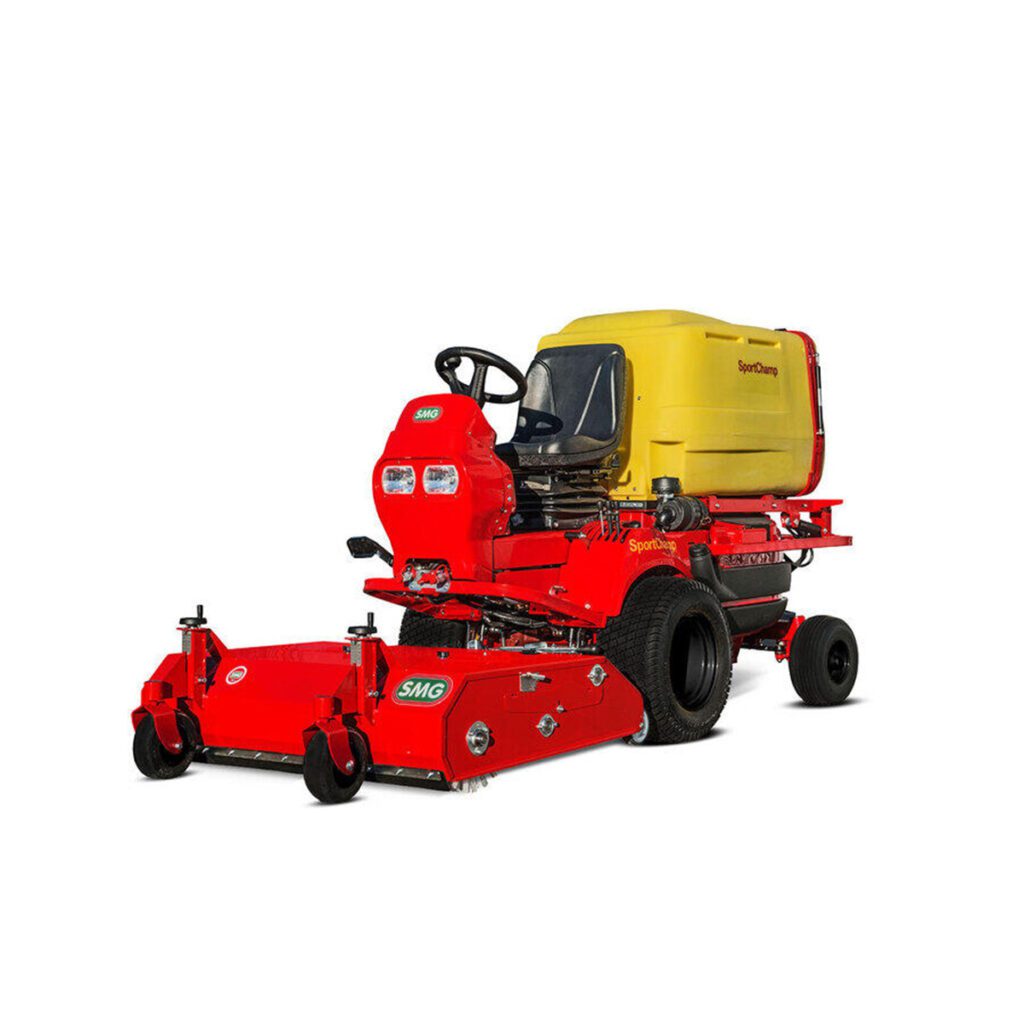
For a full-size field that has to be turned around between bookings, the ride-on is the machine. The SMG SportChamp SC2D is a 16.1 kW water-cooled diesel ride-on, 630 kg, hydrostatic drive up to 10 km/h, with a brush width of 900 to 1,600 mm depending on the attachment. It cleans, levels infill and vacuums, and it takes a long list of attachments for leaves, deep work and spreading. Small-footprint turf tyres keep the ground pressure down, which is the whole point on a carpet you cannot just grow back.
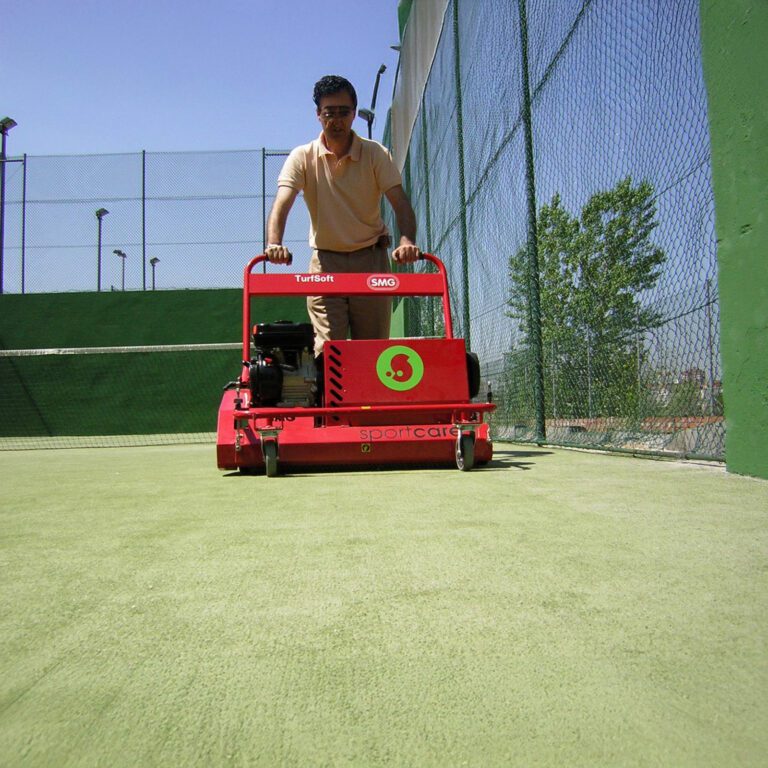
If the area is a cage, a school gym approach, or a pitch you reach through a doorway, a walk-behind is the honest tool. The TurfSoft TS2 is an 800 mm, 80 kg petrol walk-behind (2.6 kW) with a foldable arm and 360-degree swivel wheels. The TurfSoft TS3 sits in the same family. For a tractor you already own, the tow-behind TurfCare TCA1400 is ground-driven, 1,400 mm, 185 kg, and does not need a PTO. The tractor-mounted TurfKing is the PTO machine, 1,100 or 1,500 mm, for a compact tractor of at least 20 to 25 hp. Browse the artificial turf maintenance range and the ride-on cleaners.
We already have a broader piece on artificial turf maintenance machines. This cluster is the buying and programme detail: machine vs manual cleaning, how to choose a cleaner in NZ, and a cleaning programme. Call 0800 807 333.