
Solid vs hollow tine aeration: which does your turf need?
One of the most common questions we get from course managers is whether they should be running hollow tines or solid tines. It is a fair question, and the honest answer is that the two are not really rivals. They do different jobs, and the courses with the healthiest greens tend to use both through the year, each at the moment it does the most good. Understanding the difference is what lets you plan a programme rather than react to problems.
Parkland has supplied turf and golf equipment to New Zealand courses since 1988, so this is ground we have covered with a lot of greenkeepers. If you would rather talk it through for your own greens, call the team on 0800 807 333.
What hollow tining does
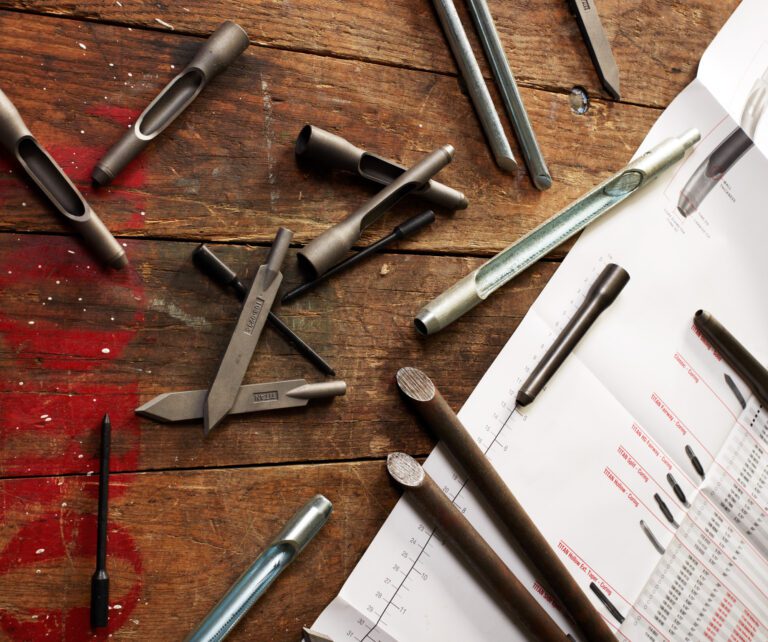
Hollow tining is the thorough one. The tines are, as the name suggests, hollow, so each pass pulls a core of soil and thatch clean out of the ground and drops it on the surface to be cleared away. That physical removal is the key. It is the only method that actually takes thatch out of the profile rather than simply pushing through it, and it opens the soil up more completely than anything short of digging the green up. The cost of all that is disruption. You are left with a surface full of holes and cores that needs clearing, topdressing and a couple of weeks of growth to recover. That is why hollow tining is the centrepiece of the aeration calendar rather than an everyday job, and why it lands in spring and autumn when the turf is growing strongly enough to heal quickly and well away from your busiest playing periods.
What solid tining does
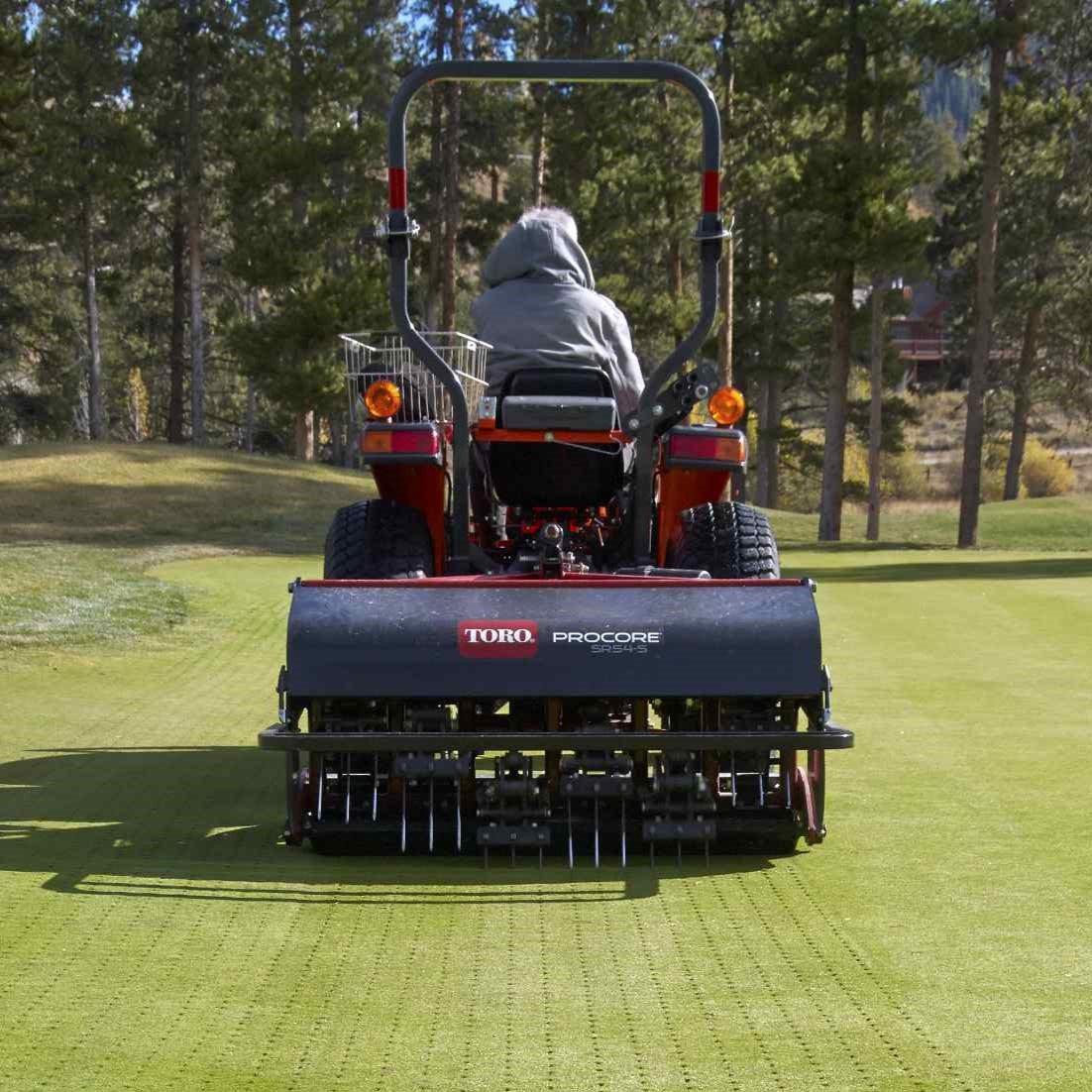
Solid tining takes a lighter touch. Instead of lifting a core, a solid tine simply punches into the ground and fractures the soil around it, creating channels for air and water without removing anything. Because there is no core to clear and far less surface disturbance, the greens recover in days rather than weeks and often stay in play throughout. That makes solid tining the tool for keeping the profile open between your major hollow-tine jobs. It will not remove thatch, and it does not relieve compaction as completely as coring, but done regularly it maintains the gains and keeps water moving through the season. Think of hollow tining as the reset and solid tining as the maintenance that holds it.
Where deep tining fits, and how to choose
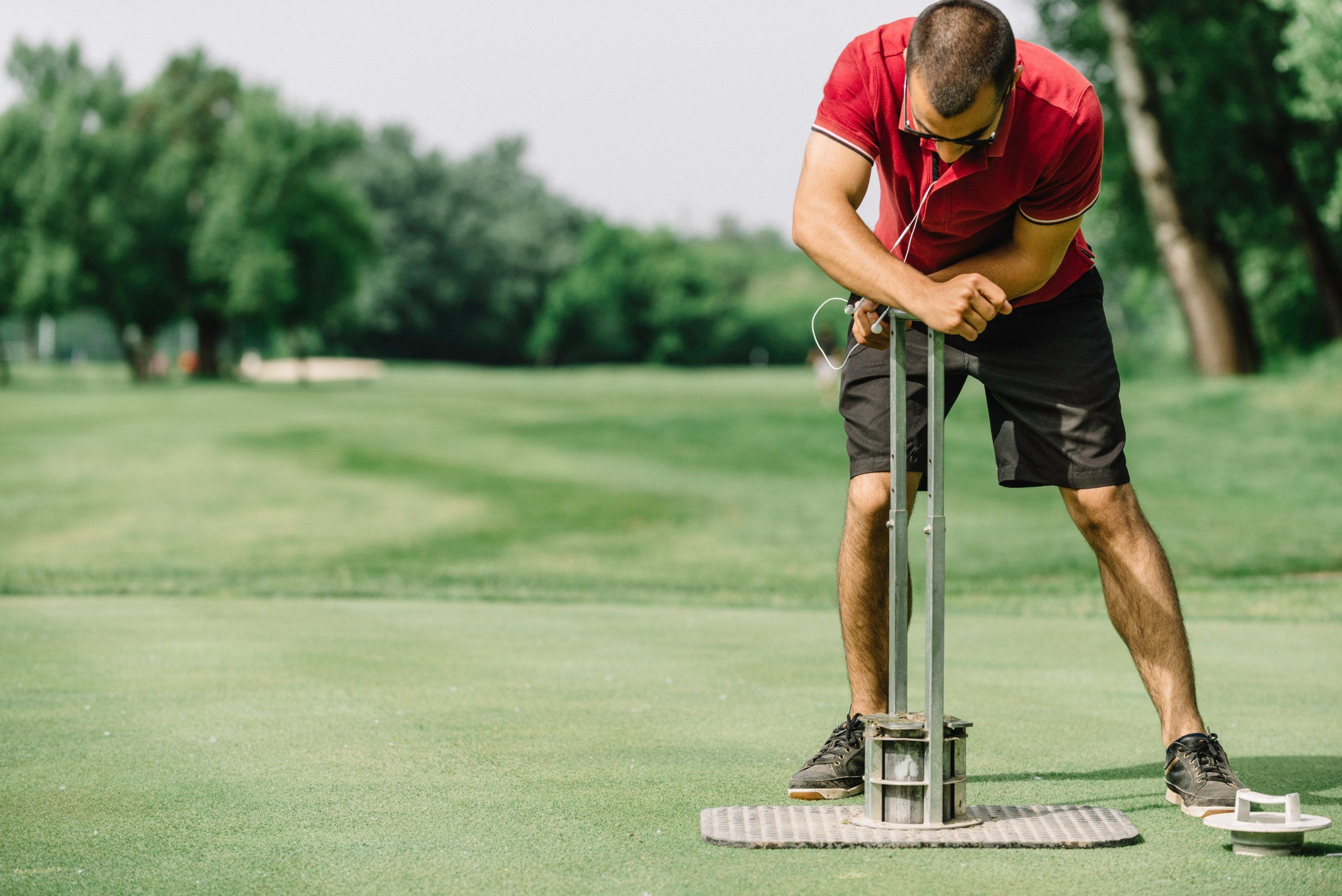
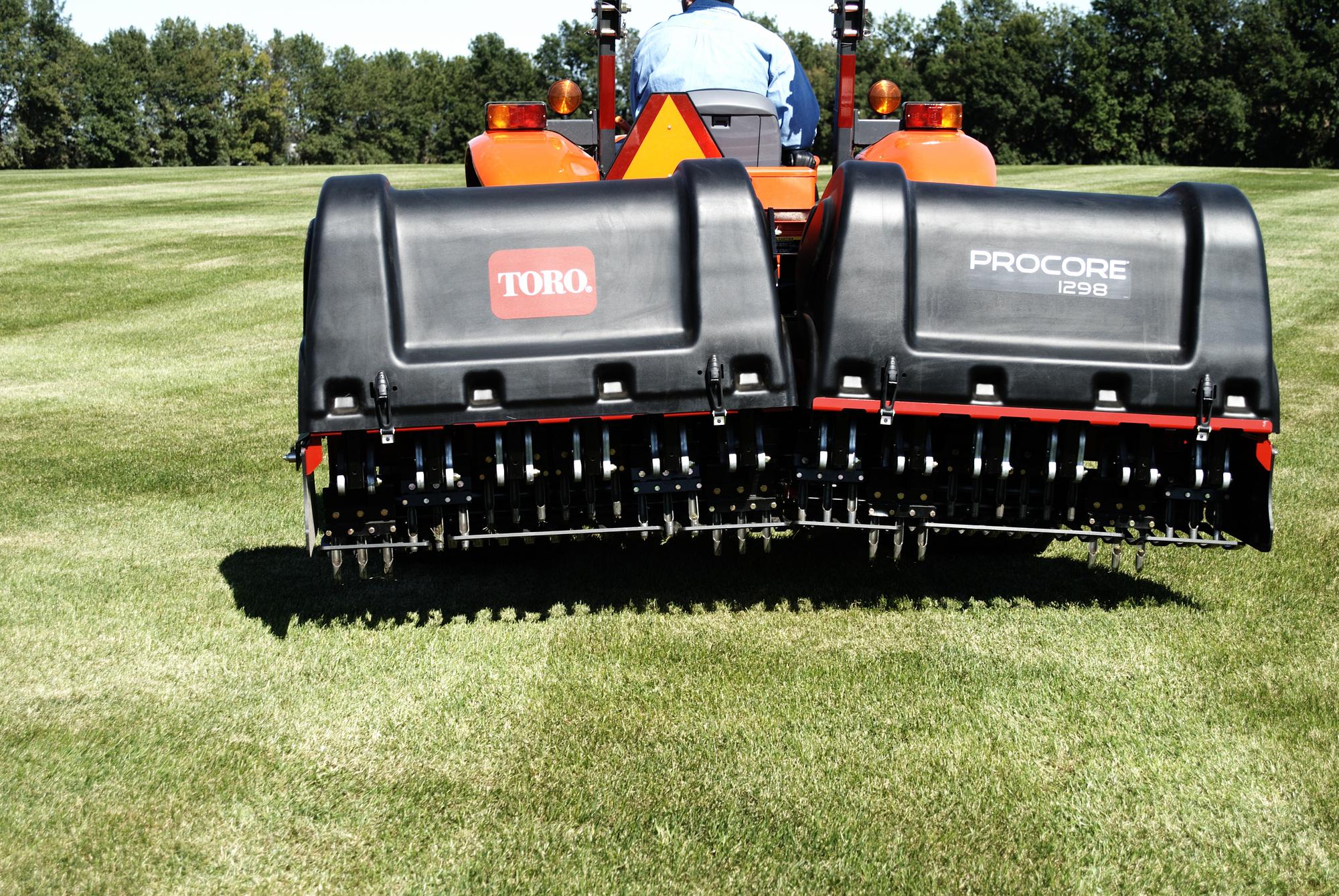
There is a third option worth knowing about, because surface work of either kind only reaches the top few centimetres. Years of traffic build a compacted hard pan much deeper down, and for that you need deep tining. A machine like the Toro ProCore SR75 drives down to around 40 cm (16 in), shattering compaction that hollow and solid tines never touch. On heavy or clay soils under constant play it becomes a valuable annual job, though many sand-based greens will get by without it.
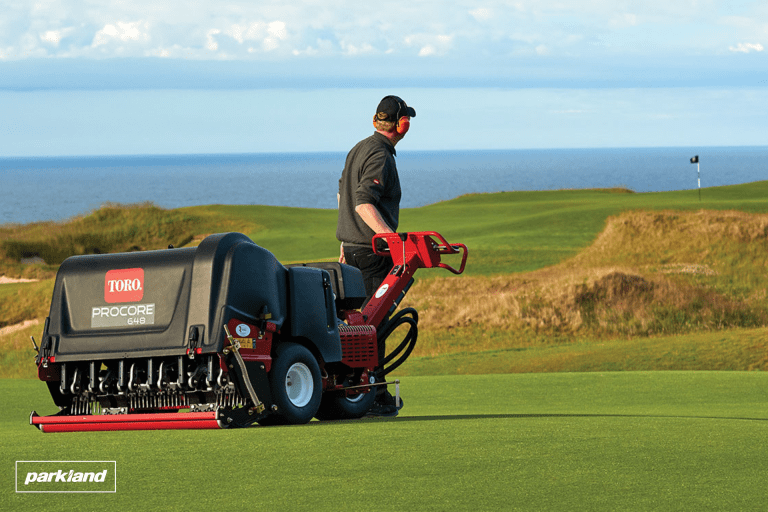
So which does your turf need? If thatch has built up and the greens feel soft and spongy, you need the removal that only hollow tining gives. If the profile is reasonable and you are simply keeping it open and draining through a busy season, solid tining is the sensible, low-disruption choice. If water still will not move after surface work and the compaction is clearly deep, that is the signal for deep tining. In practice most courses land on a blend: hollow tine once or twice a year, solid tine through the season, and deep tine annually where the soil demands it. The same greens machine, such as the self-propelled ProCore 648s, will take different tine sets for the surface work, which is what makes a single machine so versatile. For the wider picture, read what aeration is and why every course needs it, and to plan the year, our golf course aeration programme.
If you tell us about your greens, your soil type and how much play they take, we can help you settle on the right mix of tines and the machine to run them. Call the team on 0800 807 333.