
What is aeration and why does every golf course need it?
Ask any experienced course manager what separates good greens from great ones, and sooner or later the conversation comes back to aeration. It is rarely the answer golfers want to hear, because aeration is the one job that briefly makes the greens worse before it makes them far better. But it is also the job that everything else depends on. You can feed, water and mow all you like, and if the soil beneath the surface has sealed up, none of it will save you.
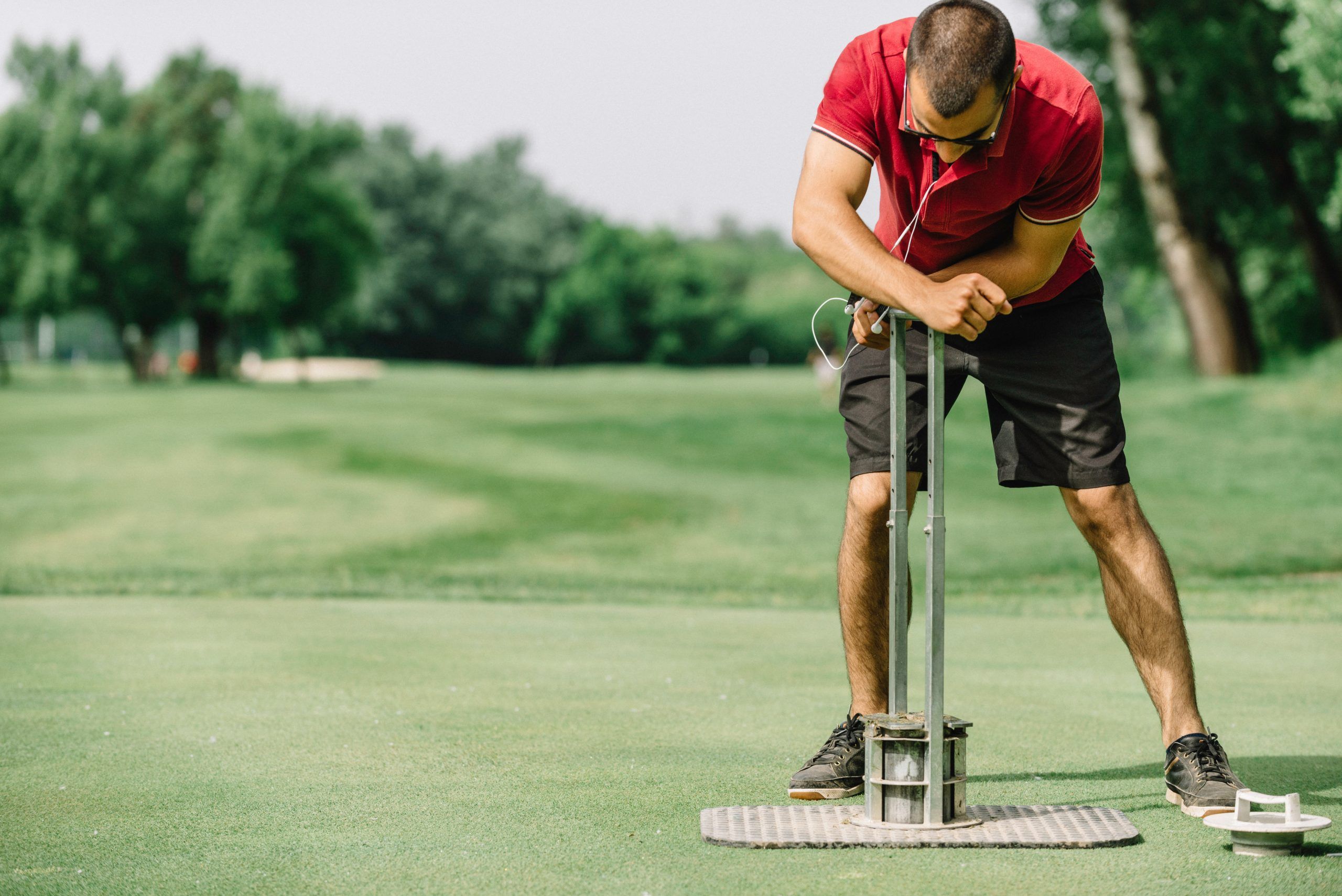
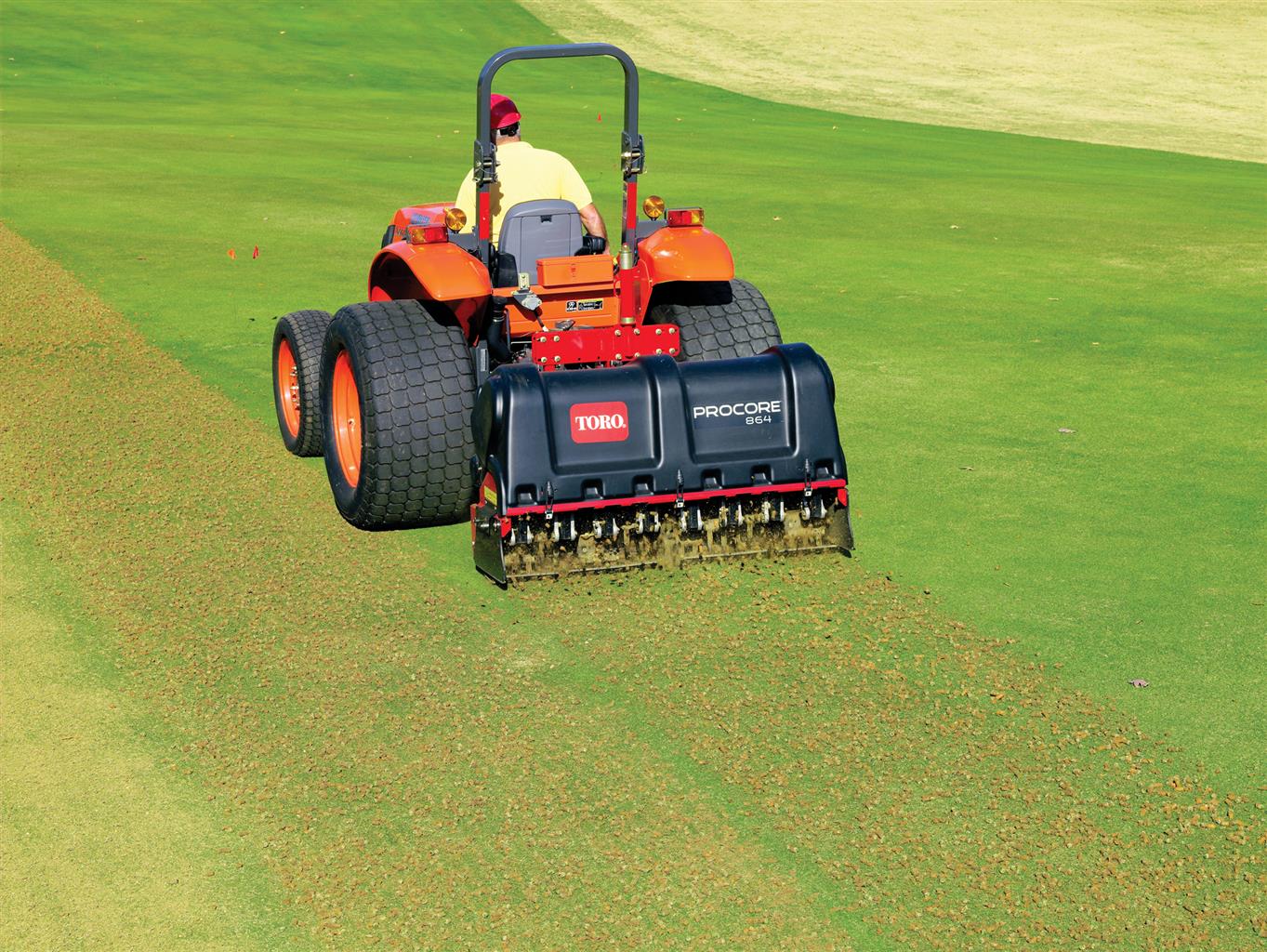
At its simplest, aeration means making holes in the turf, either by pulling small cores of soil out or by driving tines down to fracture the ground. The point is to reopen the soil so that air, water and roots can move through it again.
Parkland has supplied turf and golf equipment to New Zealand courses since 1988. If you would rather talk it through, call the team on 0800 807 333.
What is actually happening under the surface
Healthy turf is built on healthy soil, and healthy soil is surprisingly full of space. Between the particles sit tiny pockets of air and channels for water, and it is in those gaps that roots grow and the whole system breathes. The trouble is that a golf course spends every day working against that space. Every footfall, every pass of a mower, every cart that rolls across a green presses the soil particles closer together and squeezes the air out. Add a wet winter, which is most winters somewhere in New Zealand, and the problem accelerates, because saturated soil compacts more easily than dry soil and the play carries on regardless.
Once that compaction sets in, it starts a quiet downward spiral that is easy to miss until it becomes expensive. Tight soil is hard for roots to push through, so they stay shallow. Water can no longer soak in, so it sits on the surface, runs off to the low points, or leaves the green soft and slow underfoot. Oxygen cannot get down to the roots, so the plant weakens. Weak, shallow-rooted turf then thins out, which invites weeds and disease and leaves the surface fragile the moment the weather turns hot or dry. None of this happens overnight, which is exactly why it catches people out. Aeration is how you interrupt the spiral, and alongside topdressing it is what slowly builds the firm, smooth, free-draining profile that gives you reliable green speed year after year.
Learning to read the signs
The clearest tell is water. If rain or irrigation pools on the surface or runs off instead of disappearing into the profile, the soil has sealed up and is asking for attention. Close behind it is the feel of the turf underfoot, which goes hard and starts to thin along the walk-on points, the cart routes and anywhere traffic concentrates. If you cut a small plug and look at it, the story is usually written in the roots: on compacted turf they are short and shallow rather than reaching well down. You may also find a spongy layer of thatch sitting between the grass and the soil, holding moisture and softening the surface. And often the simplest sign is the most telling of all, which is turf that looks patchy and tired even though your feeding and watering are spot on. When the soil below cannot support the plant, no amount of surface care will fix it.
Hollow, solid or deep: choosing your approach
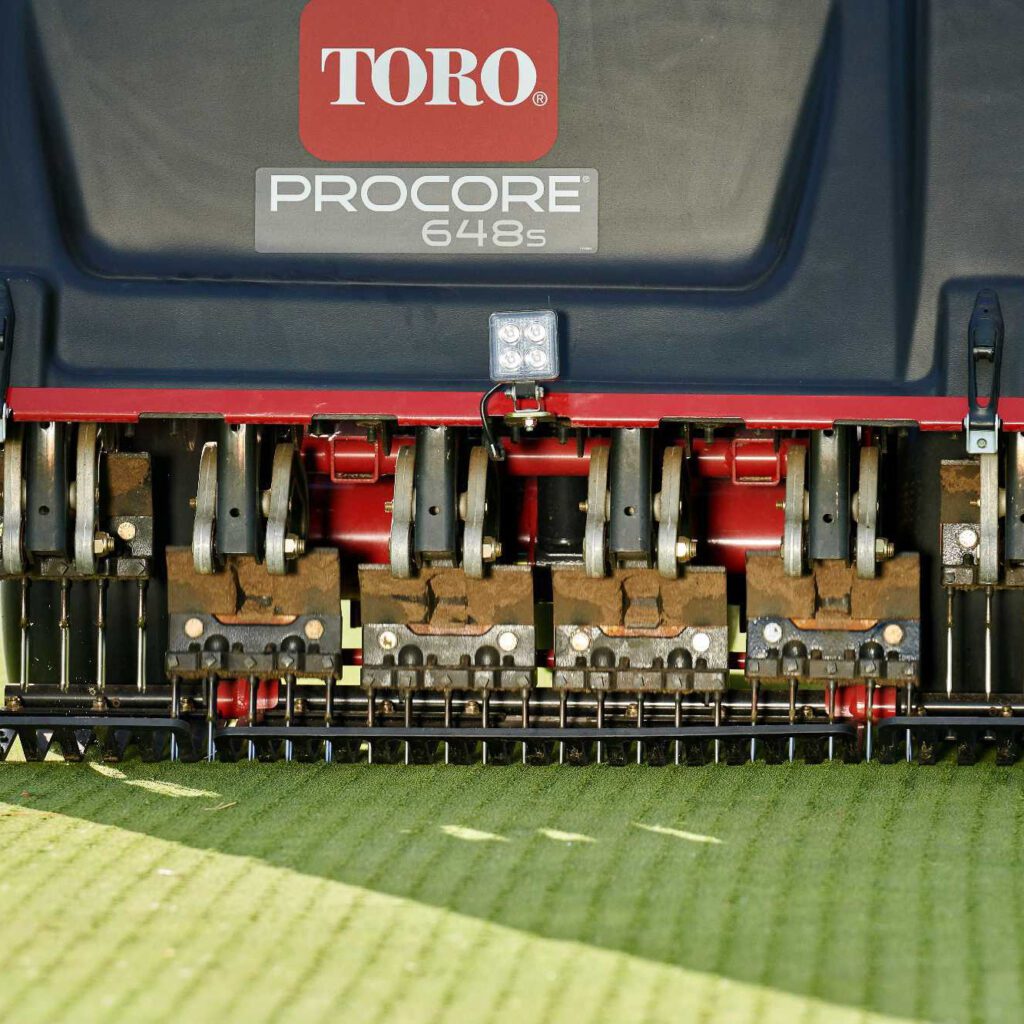
Aeration is not a single job so much as a small family of them, and most courses use more than one through the year. Hollow tines pull a core of soil and thatch clean out of the ground, which is the most thorough way to relieve compaction and physically remove the thatch layer. It is also the most disruptive, so it is the work you plan carefully around the calendar, usually in spring and autumn when there is enough growth for the greens to knit back within a couple of weeks. Solid tines, by contrast, punch a hole and fracture the soil without lifting a core. Recovery takes days rather than weeks, so this is the lighter, more frequent work you can do through the season to keep the profile open without taking greens out of play.
Then there is deep-tine work, which reaches the compaction that surface aeration simply cannot touch. Years of traffic build a hard pan well below the top few centimetres, and only a deep-tine machine gets down to it. The Toro ProCore SR75 we supply, for instance, works to around 40 cm (16 in), which is a different order of depth to the surface machines. Most courses will not need that every season, but on heavy or clay soils under constant play it becomes the annual reset that keeps drainage honest. If you want the full picture of when to use each, we have written it up separately in solid vs hollow tine aeration, and set out a full year’s calendar in our golf course aeration programme.
How often you aerate comes down to your soil, your traffic and your climate, but the shape of it is fairly consistent: one or two major hollow-tine jobs a year on the greens, backed up by lighter solid tining through the season, with deep-tine work brought in annually where compaction has gone deep. The busier the turf and the heavier the soil, the more it asks for. Timing matters as much as frequency, which is why the disruptive jobs belong in the growing season and well clear of your competition schedule.
The machines that do the work
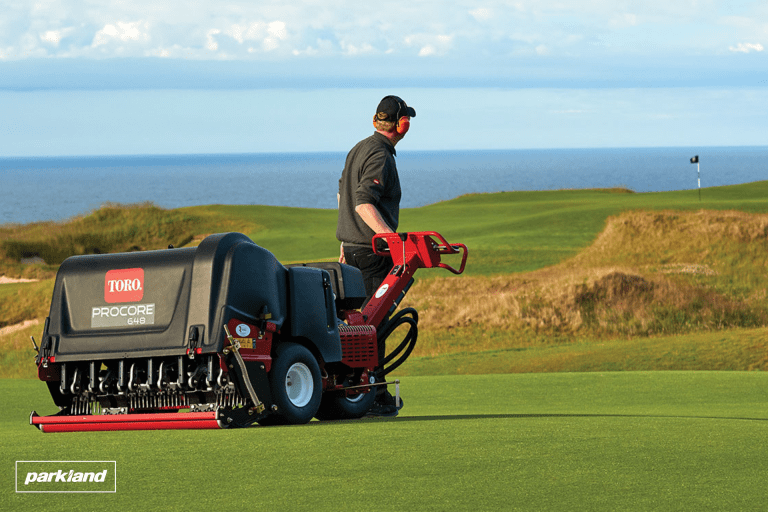
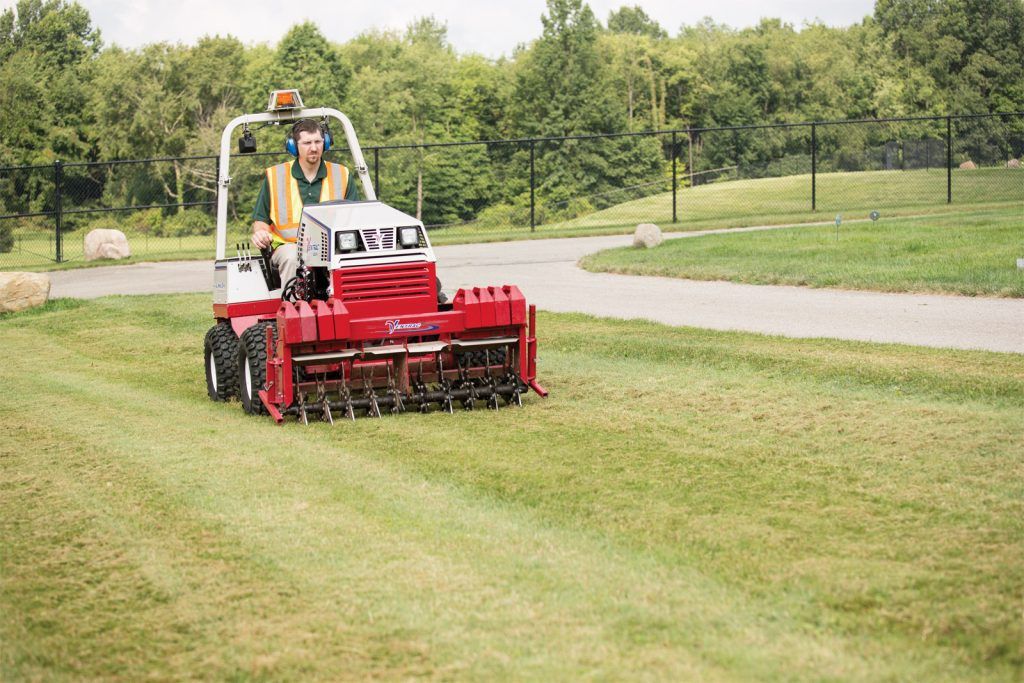
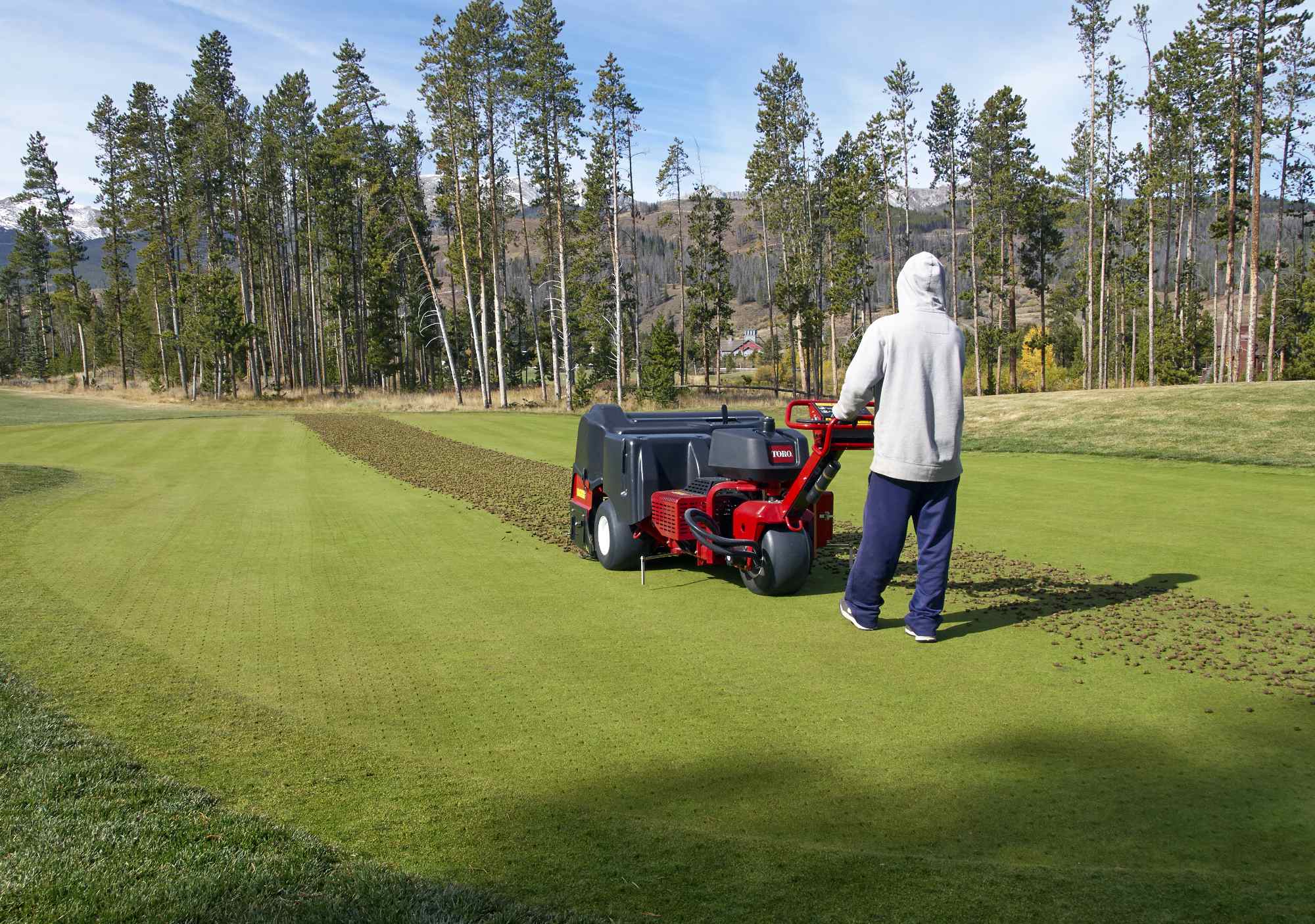
The machine you reach for depends entirely on the surface. For greens and tees, where precision and a tidy finish matter and you need to move easily around the surface, the self-propelled Toro ProCore 648s is the machine most New Zealand courses build their programme around, with a 1.27 m (50 in) working width and six tine heads that hold hole spacing evenly across the green. Between the greens machine and the big fairway units sits a genuinely useful middle option in the Ventrac EB480, a 1.22 m (48 in) aerator that mounts on the Ventrac compact tractor and takes coring, spoon or slitter tines. Because the Ventrac is articulated and sure-footed on slopes, the EB480 is the one we point people to for tees, approaches, surrounds and the banks that a tow-behind cannot safely reach.
When you move onto fairways and larger areas, productivity becomes the priority, and a tow-behind like the ProCore 1298 covers ground far faster at a 2.49 m (98 in) width, provided you have a tractor of 40 to 50 hp to pull it. For the deep compaction that nothing else will reach, the tow-behind ProCore SR75 is the specialist, clearing roughly 3,530 square metres an hour. You can see the whole range on our corers and aerators page, and if you are weighing up which to buy, our guide to choosing an aerator in NZ compares them side by side.
The honest truth about aeration is that its reputation is unfair. Golfers grumble about the holes for a fortnight and forget the months of true, healthy, fast greens that follow. The courses that get it right are simply the ones that have stopped treating it as an interruption and started treating it as the foundation.
If you want help matching a machine to your turf, or building a programme that suits your climate and your calendar, that is exactly what we are here for. Give the team a call on 0800 807 333.
Products in this article
- Toro ProCore 1298 | Turf Aerator
- Toro ProCore 864 | Aerator
- Toro ProCore® 648s | Walk Behind Turf Aerator
- Toro ProCore® SR54 | Turf Aerator
- Toro ProCore® SR70-S | Turf Aerator
- Toro ProCore® SR72 | Turf Aerator
- Toro TransPro 648 | ProCore Trailer
- Toro Aerator 686 198cm (78″) | Tow Behind Corer – Drop Pin
- Toro Aerator 687 198cm (78″) | Tow Behind Corer – 3-point Hitch
- Toro Stand-On Aerator | 30 inch
- Ventrac Aerator | Tractor Attachment – Core Tine