Spoons or tines? Open spoon and hollow tine aeration
When a greenkeeper asks “spoons or tines?”, they are not choosing aeration against something else. They are choosing how the core comes out. An open spoon and a closed hollow tine both take a plug of soil from the ground. What changes is the hole you walk away from, how much soil lands on the surface, and how often the tine packs up halfway across the green.
Hole count and working depth still do more for the turf than the shape of the tool. Run either type too shallow on hard ground and you have wasted a morning. Get the moisture right, hit enough holes, and both will open the profile. The argument is about finish, cleanup and plugging, not about one method “working” and the other not.
Parkland has supplied turf and golf equipment to New Zealand courses since 1988. If you would rather match tines to the machine you already own, call the team on 0800 807 333.
What an open spoon actually does
An open spoon has a cutaway face. It scoops as it goes, so the core tends to kick out rather than sit jammed in a tube. That is why crews who work heavier soil often prefer them: they stay cleaner for longer. The cost is cosmetic. The hole is less tidy, and more soil comes up with the plug.
That extra soil is not always a problem. If you are overseeding, the material the spoon lifts is a ready seedbed. It also mixes into the thatch, which is closer to thatch modification than to dethatching. Water, fertiliser and air then have a path into the root zone, and the organic layer starts to break down instead of sitting as a sealed mat. On warm-season turf the cores can even carry viable nodes you can use to patch thin ground, though most New Zealand greens work is still cool-season and the value is the hole, not the sprig.
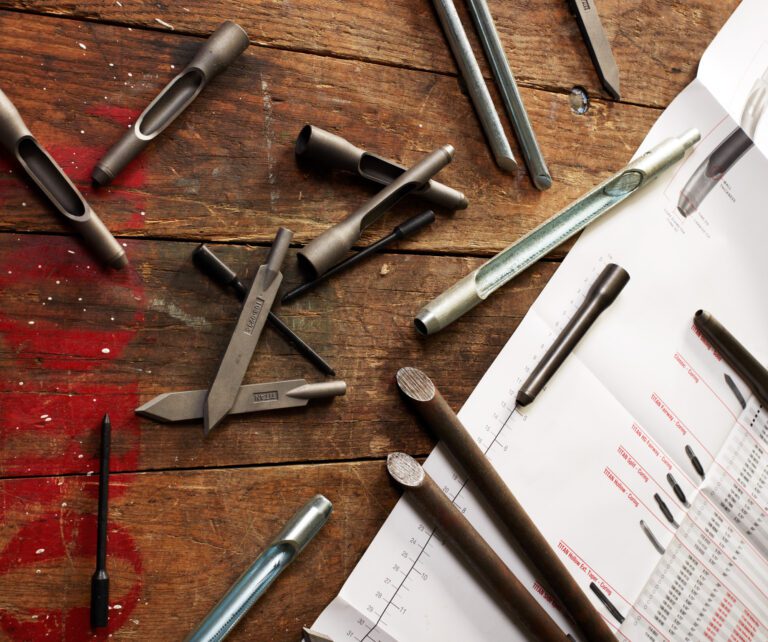
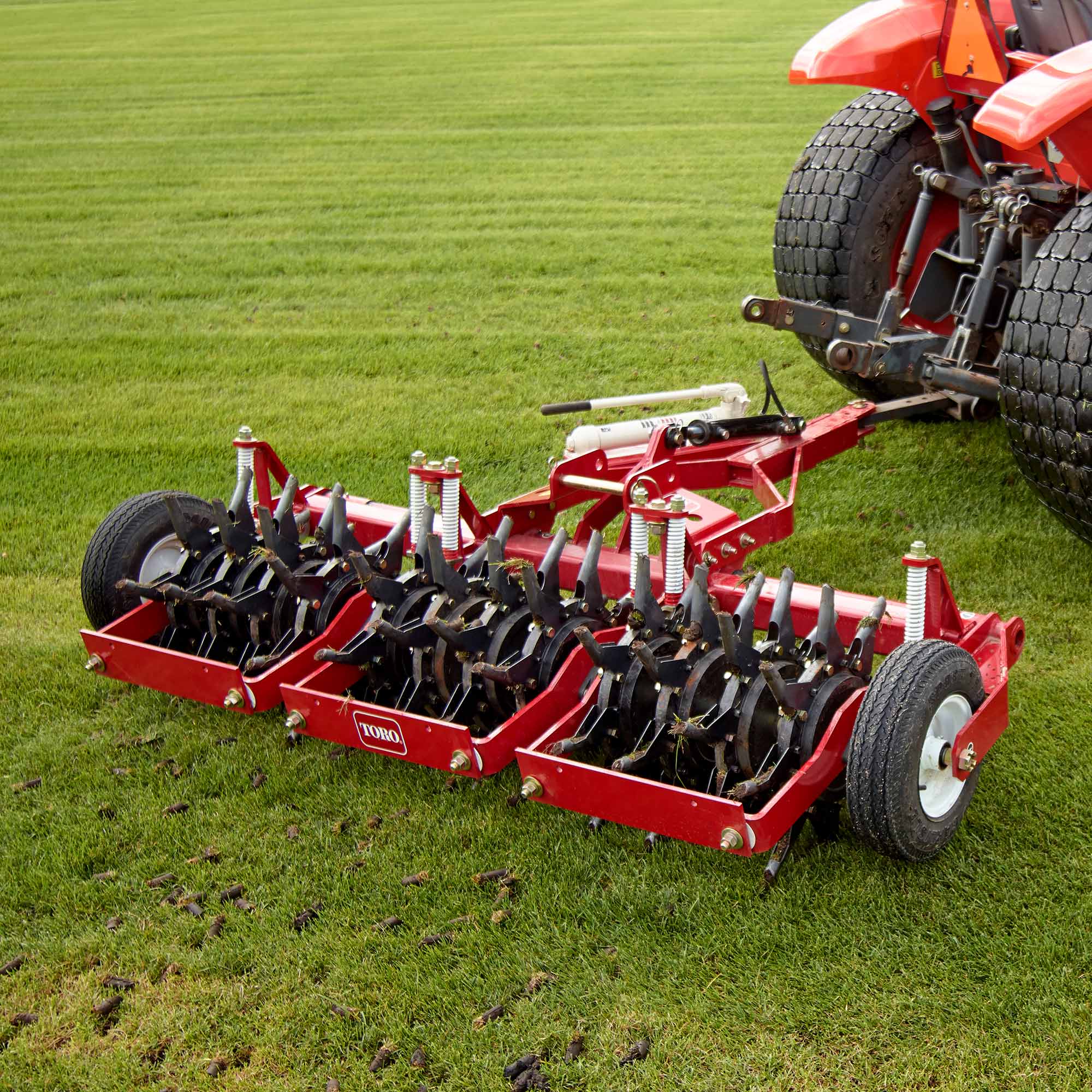
On our range the Toro Open Spoon Tine is for the Turf Aerator 686 and 687. It bolts onto the drum. It is not a ProCore mount. Sizes are 12.7 mm (1/2 in) and 19.0 mm (3/4 in). The closed version on the same drum is the Toro Closed Spoon Tine, same sizes, a tidier hole if you want to stay on spoons. Both live under spoon tines.
What a closed hollow tine does
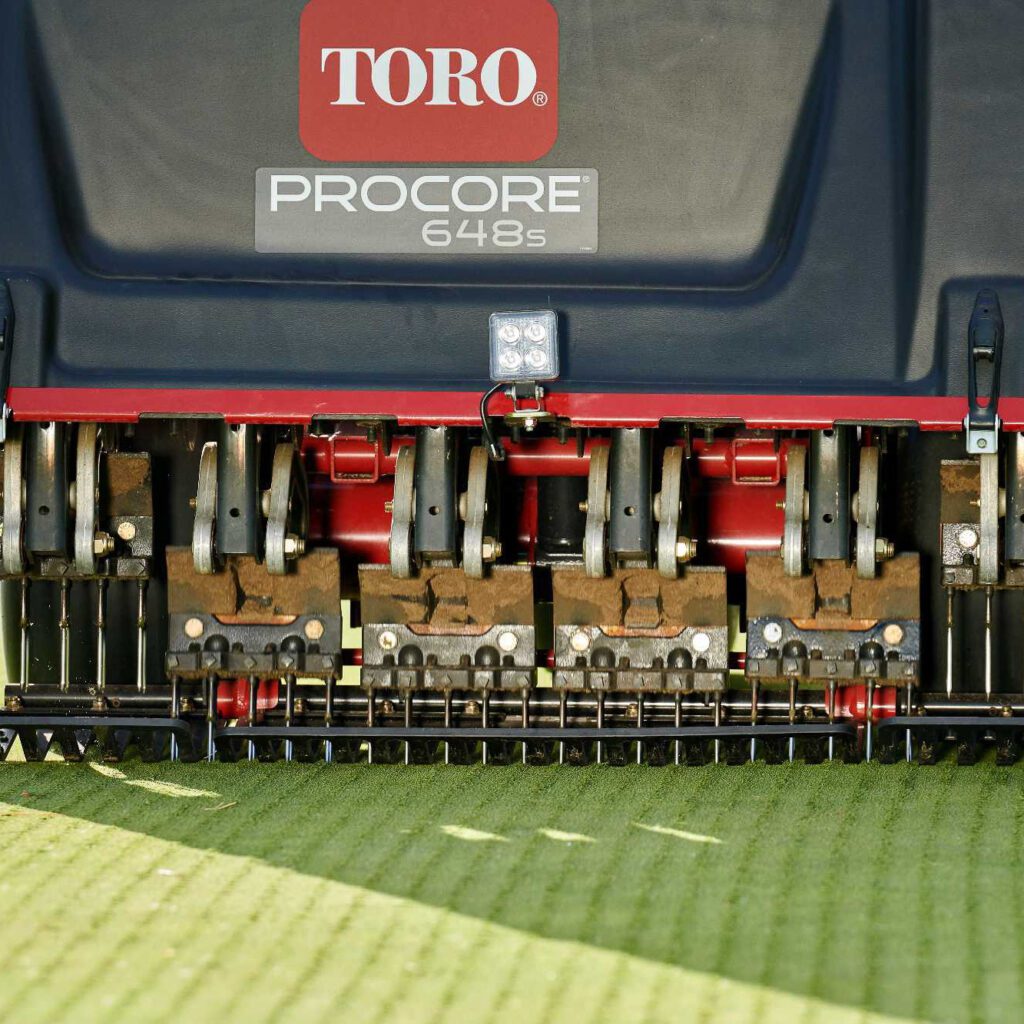
A closed hollow tine is a tube. It punches, fills, and ejects a cleaner core, and the hole looks neater when you walk off the green. That is why greens and tees usually get hollows. The closed window keeps the turf cleaner than a side-eject tine, which is the whole point of a presentation surface. Toro TITAN Hollow and Max Hollow sit in that job, on 19 mm and 22.2 mm mounts. The everyday heat-treated option is under Classic tines. The carbide set is on hollow tines.
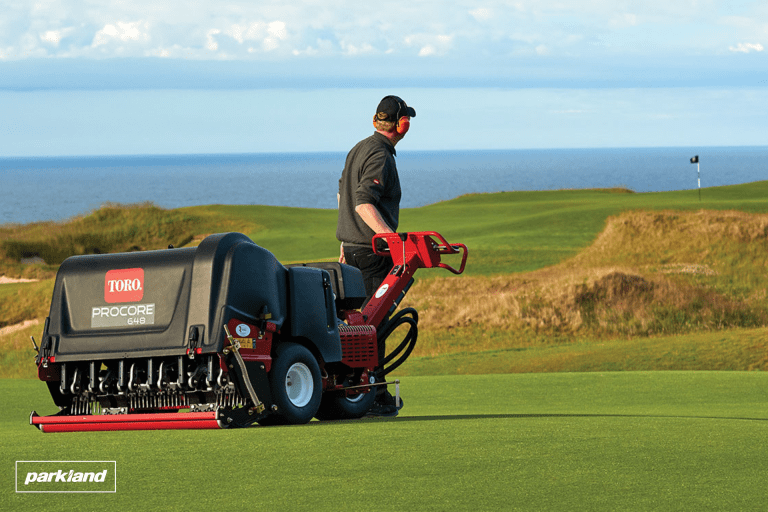
They plug more readily in sticky soil than an open spoon. On a sand green they stay clean enough if you keep them sharp and empty. On a heavy fairway or a winter sports field you may want a side-eject or fairway tine instead, because those have an ejection window and a thicker wall. The machine most New Zealand courses build the greens job around is the self-propelled Toro ProCore 648s. Same head takes different tine sets through the year, which is what makes one punch-type unit cover the calendar.
They do a comparable job. The difference is the finish.
From a turf point of view the two are close. Both pull a core. Both relieve surface compaction if you hit enough holes at a useful depth. Superintendents who have run both tend to say the agronomy is similar and the argument is the surface you leave. An open spoon kicks the core out more readily and stays cleaner. A closed hollow leaves the neater hole. That has been the trade-off for a long time, and it still holds on New Zealand greens and sports fields.
Choose an open spoon when you want the core out reliably, you are overseeding, or the soil is the sort that packs a closed tube. Choose a closed hollow when the green has to look clean the same afternoon and you can live with a bit more attention to plugging. Closed spoons sit in the middle on a 686 or 687: still a spoon mount, a tidier hole than the open face. Hollow ProCore tines are a different mount and a different machine. Do not try to treat them as interchangeable parts.
Depth, moisture and the layer under the tines
Neither type will punch well into dry, hard ground. Wait for moisture, or water first. The other mistake is going in wet enough to smear the hole and leave a puddle. Heavy clay is harder to penetrate than a sandy loam, which is obvious until someone wonders why the same tine that flew through a sand green barely marked a compacted touchline. Depth is a soil condition, not a catalogue number.
There is a known problem just below the aeration zone. If you always work to the same depth you can pack a layer at about 10 cm (4 in), a smear or pan the next pass never quite breaks. Vary the depth. Do not treat one setting as the programme. Surface spoons and hollows will not reach a hard pan that has formed well below that. For that job you need deep tining, which we cover in solid and hollow tine aeration and in the aeration programme.
Solid tining is a different question again. A solid tine punches and fractures without lifting a core. Useful between major coring jobs, quicker recovery, no mess to sweep. It is not a substitute for the removal that only a spoon or a hollow gives you when thatch has built up. If you want the background on why any of this is worth the disruption, start with what aeration is and why every course needs it.
What we actually put on New Zealand courses
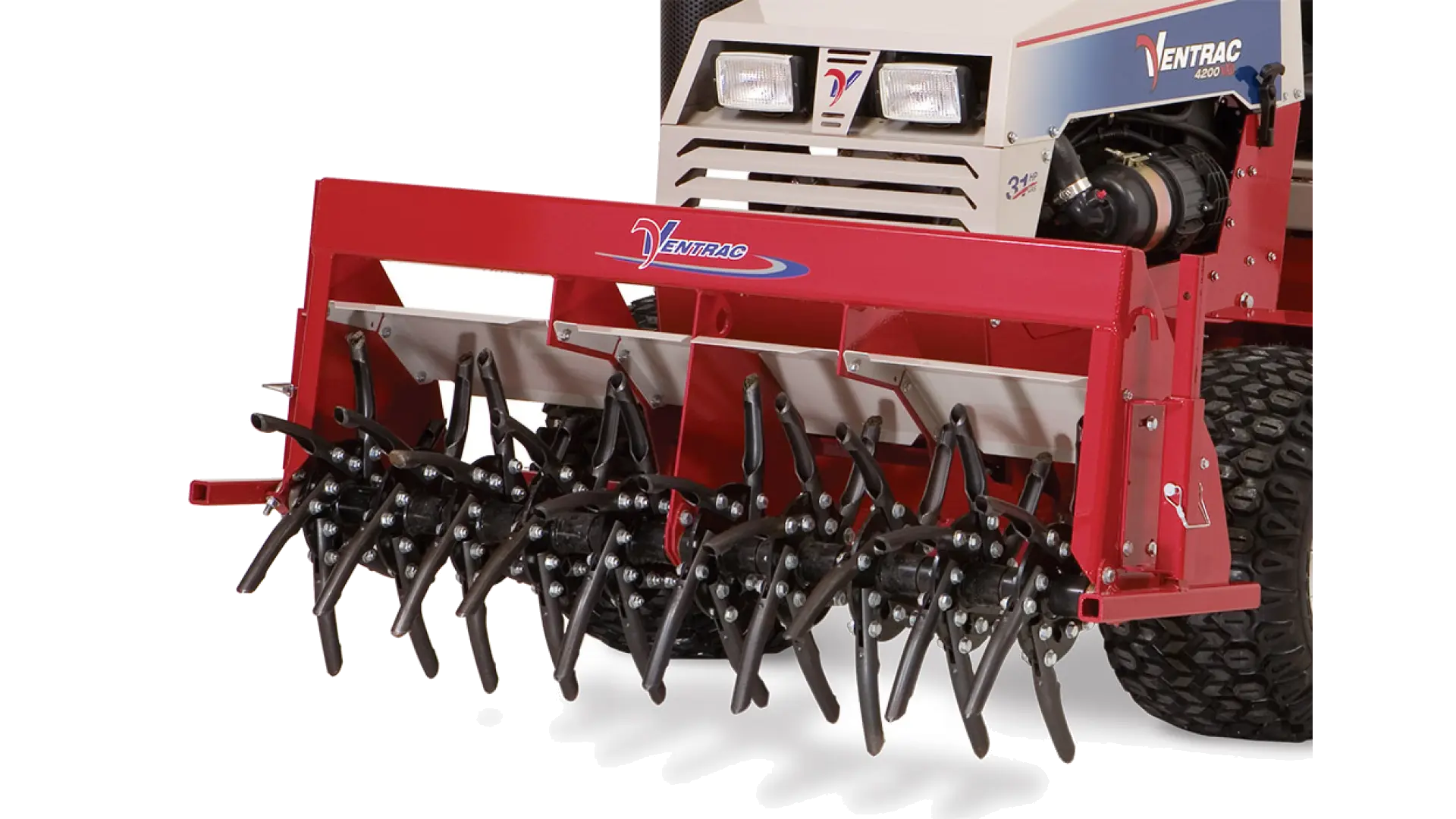
Drum aerators with spoons still earn their keep on sports fields and on older 686 and 687 machines that are still working. Greens work has mostly moved to a punch-type ProCore and a hollow or solid set, because hole spacing is even and the finish is cleaner. The Ventrac EB480 sits in the middle: coring, spoon or slitter tines on the same head, useful on tees, surrounds and the slopes a tow-behind should not be asked to work.
If you are buying tines, start with the machine you already own. Spoons for a 686 or 687. Hollow, quad or side-eject for a ProCore. Cheap copies mash the hole and wreck the head, which is why we still send people to why Toro coring tines beat cheap copies before they order a bargain set. The machines sit under corers and aerators. The full tine list is under tine and tine heads.
A few questions we get asked
Are spoons the same as hollow tines? Both pull a core. On our range they are not the same part. Spoons bolt to a 686 or 687 drum. Hollows go in a ProCore head.
Which leaves a cleaner hole? A closed hollow tine. That is why greens usually run them.
Which stays cleaner in heavy soil? An open spoon. It kicks the core out more readily and is slower to plug.
Can I put spoon tines on a ProCore? No. Wrong mount. Match the tine to the machine, then pick the size for the hole you want.
Tell us the machine, the soil and the surface and we will point you at the set that belongs on it. Call 0800 807 333, or start with spoon tines and hollow tines and we will take it from there.